
Mike Flippo, 123RF
Shell scripts: Equal rights for Unix derivatives and Linux
Vive la DiffÈrence
The first lines of a shell script can be enough to cause administrators headaches. Many Linux distributions supply scripts written in Bash (Bourne Again Shell [1]), and, because not all Unix derivatives actually include a Bash shell, porting the scripts additionally means replacing the interpreter.
The Bourne shell is the interpreter of choice for this task. In fact, it should generally be your first choice because only the Bourne shell (Sh) guarantees maximum compatibility. But, again, some attention to detail is recommended.
Shell Game
More recent Linux distributions don't include a separate binary for the Bourne shell. Instead, they provide a subset of Bash. Thus, the pseudo-Sh doesn't react like a genuine Bourne shell.
A script written in this shell isn't really Bourne shell-compatible. You will notice this on Unix systems like Solaris [2], where unexpected results can sometimes confound users (Figure 1).
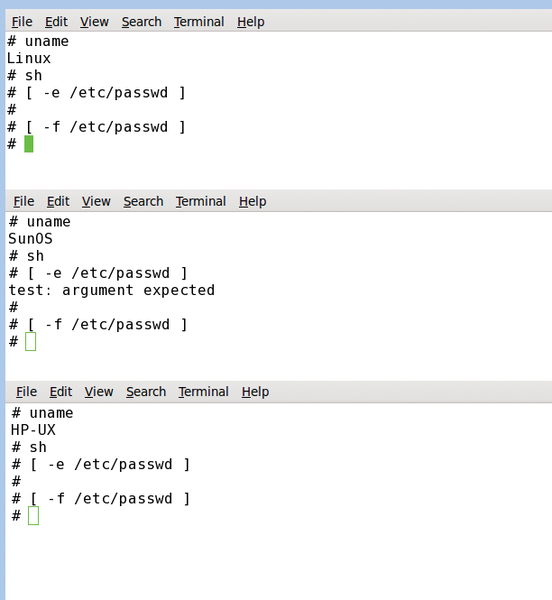 Figure 1: The Bourne shell will react differently depending on the operating system.
The results can be anything from interruptions caused by
...

Buy this article as PDF
(incl. VAT)
Buy ADMIN Magazine
Related content
-
Monitoring daemons with shell tools
 Administrators often write custom monitoring programs to make sure their daemons are providing the intended functionality. But simple shell tools are just as well suited to this task, and not just for systems that are low on resources.
 -
Linux Essentials for Windows Admins – Part 1
Windows Admins have to know something about Linux, so expand your current skills to include it in your administrative toolbox.
-
Innovations in PowerShell 5
 Windows 10 brings an updated, fifth release of PowerShell that vastly simplifies the task of managing modules and software packages. The scripting language now also handles various formatted output from commands and selection lists.
 -
Desired State Configuration for Linux
 The combination of Open Management Infrastructure standards and the performance of Windows PowerShell opens new perspectives on heterogeneous networks, making PowerShell a realistic option as a management console for Unix and Linux.
 -
PowerShell Part 3: Keeping PowerShell in the Loop
PowerShell’s ability to use loops extends its reach to remote systems and performs repetitive operations.