
© Stanislaw Tokarski, 123RF.com
Neglected IPv6 features endanger the LAN
Protocol Duties
In 1995, the Internet Engineering Task Force (IETF) chose IPv6 as the successor to IPv4. Initially, this was not an issue that raised much interest. But this changed when Microsoft added IPv6 support to its Windows Vista and Windows Server platforms in 2007. Linux in all its variants and Apple's Mac OS X followed suit; thus, the new protocol spread with each new installation. On all of these computers today, IPv6 is active by default, communicating in unsolicited dual-stack operations using IPv4 and IPv6. Moreover, Microsoft's operating systems introduced transition technologies, which use IPv4 as a link-layer protocol for IPv6 use. This happens autonomously and, in some cases, long before admins organize normal IPv6 operations – which is exactly where the latent threat lies.
Dual-Stack on the LAN
The most common operating systems on the LAN are Windows, Linux, and Mac OS X. They all run IPv6 in parallel with IPv4. IPv6 is enabled and active by default, and the systems on the network communicate via dual-stack operations (Figure 1). The overview in Table 1 shows the default settings for current operating system versions.
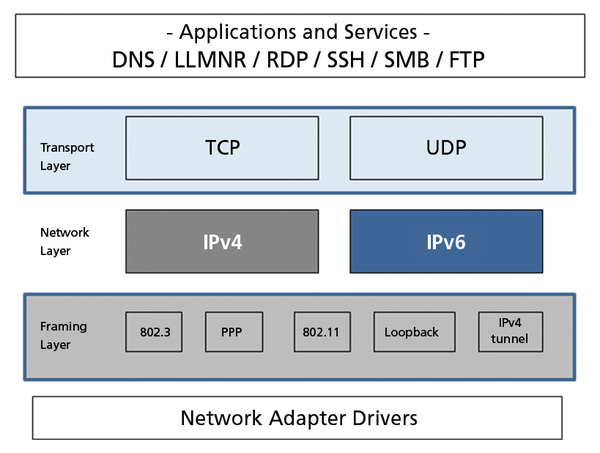 Figure 1: On the current crop of operating systems, IPv6 is
...

Buy this article as PDF
(incl. VAT)
Buy ADMIN Magazine
Related content
-
Neglected IPv6 Features
IPv6 is establishing itself in everyday IT life, and all modern operating systems from Windows, through Mac OS X, to Linux have it on board; but if you let IPv6 introduce itself into your environment, you could be in for some unpleasant surprises.
-
IPv6 tunnel technologies
 Now that IPv6 is the official Internet protocol, all that remains is the simple task of migrating all the machines on the Internet. Until that happens, tunnel technologies provide an interim solution.
 -
IPv6 security on IPv4-only networks
 Even though corporations are looking to move to IPv6, in some situations networks still rely exclusively on IPv4. We discuss ways to minimize delays and unsatisfactory behavior in mixed IPv4/IPv6 IT environments.
 -
The next generation of Internet connectivity
 Transitioning from IPv4 to IPv6 will be messy; we describe IPv6 served three ways.
 -
Configuring IPv6 in Windows with NetShell
 Windows provides a simple dialog box for configuring IPv6, but the available settings only scratch the surface. IPv6 comes with many features that are primarily managed using the command-line tool NetShell.
Subscribe to our ADMIN Newsletters
Subscribe to our Linux Newsletters
Find Linux and Open Source Jobs
Most Popular
Focus On Self-Hosting
• Reliable Network Storage with TrueNAS Community Edition
• Self-Hosted File Syncing with Seafile
• Wiring the Modern Stack with Node-RED
• Self-Hosted Collaboration with Forgejo
• Self-Hosted PaaS with Coolify
• Build and Host Docker Images
• Self-Hosted Pritunl VPN Server with MFA
Support Our Work
ADMIN content is made possible with support from readers like you. Please consider contributing when you've found an article to be beneficial.